
Food & beverage
Food and beverages are an essential part of our everyday lives and cultural identity, but they are also closely linked to major sustainability challenges. Choices around what we eat and drink, how food is produced, and how it is consumed have a direct impact on biodiversity, the climate and human health.
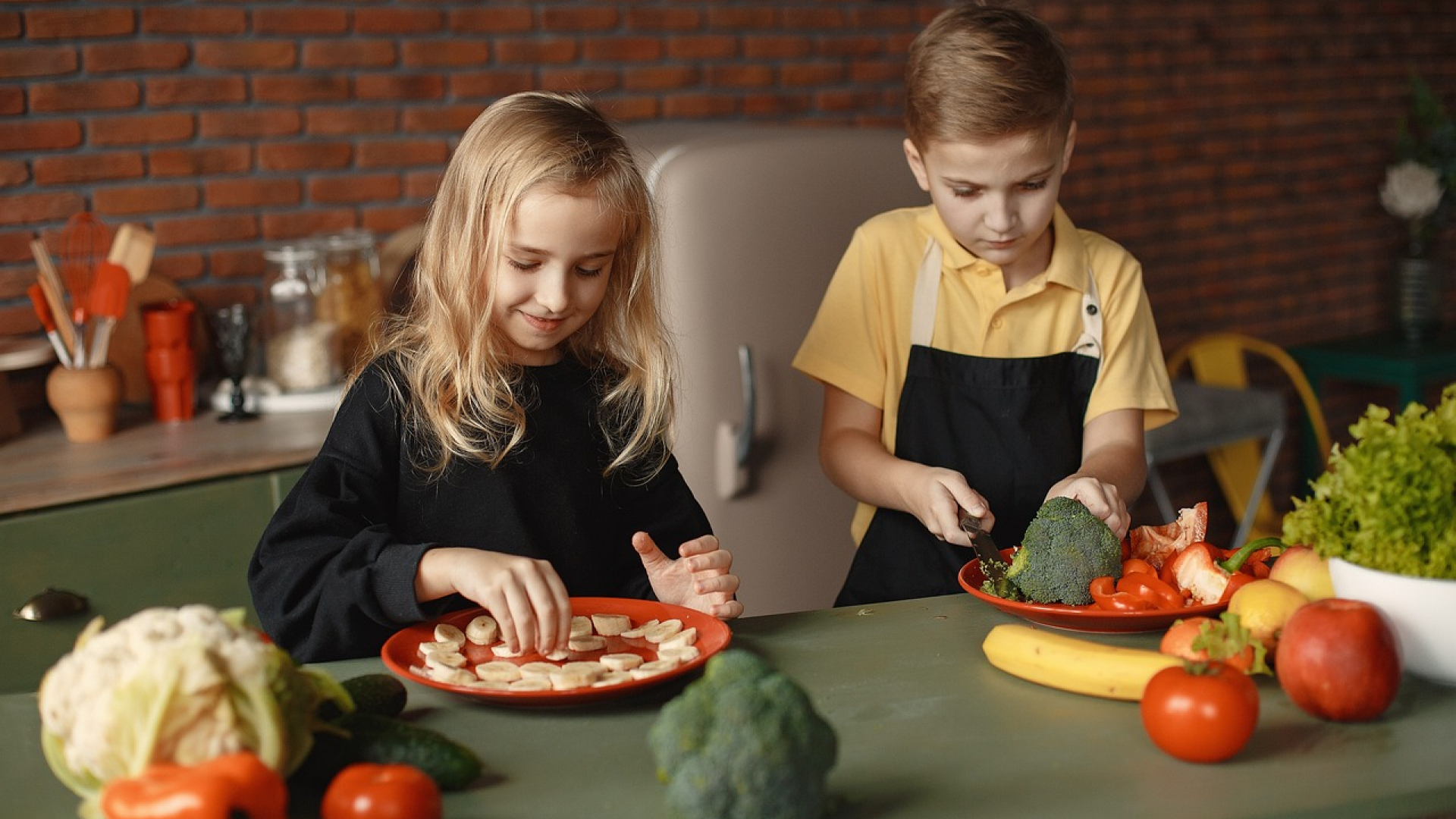
Didactic Bricks give students the opportunity to actively and creatively explore solutions to these challenges. Through school gardening, cooking classes and lessons about food chains and waste prevention they learn how to make healthy and sustainable choices.
Facts and figures
The food system accounts for about one-third of global greenhouse gas emissions, primarily from agriculture, transport, and processing.
Meat and dairy production are responsible for a large share of emissions – livestock farming alone contributes around 14.5% of global greenhouse gases.
Food waste is a critical issue: roughly 1/3 of all food produced globally is lost or wasted, contributing to unnecessary emissions and resource use.
Agriculture uses about 70% of the world’s freshwater, making sustainable farming practices crucial for climate adaptation.
Plant-based diets and local, seasonal food choices can reduce emissions by up to 50% per person compared to meat-heavy diets.
In 2023, Denmark saw a growing shift toward sustainable food consumption, with organic products making up 13% of total food sales – one of the highest shares globally.
Innovations in circular economy, such as using food by-products (e.g. spent grain from breweries, fruit peels, coffee grounds), can reduce waste and inspire new business models.
Packaging remains a challenge: single-use plastics from the food and beverage sector are a major source of pollution, while alternatives like compostable materials are still emerging.
Didactic tips
Students can actively engage with the theme of food and beverages by:
Participating in local food production projects.
Reflecting on their own consumption habits and exploring more sustainable alternatives (e.g. plant-based meals, seasonal produce).
Experimenting with sustainable food practices, such as cooking with leftovers, reducing packaging, or trying meat-free days.
Developing solutions for reducing food waste at school or in their community.
Communicating their ideas and sustainable recipes, campaigns, or product innovations to peers or external guests.
Sources: European Climate Pact, Foodnavigator.com, Think Big Act Now, Jong Leren Eten program Netherlands